Paranormal Investigation Toolkit
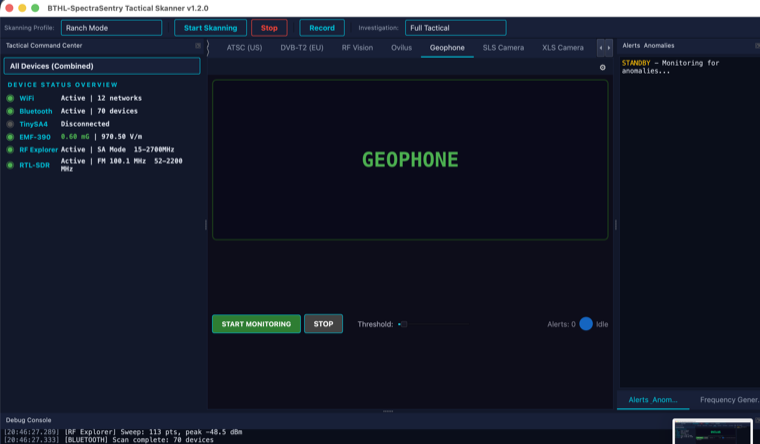
A suite of investigation tools — Ovilus, REM-POD, Cold Spot, Tesla Field, Laser Grid and Geophone — every one driven by real sensor, audio or camera input.
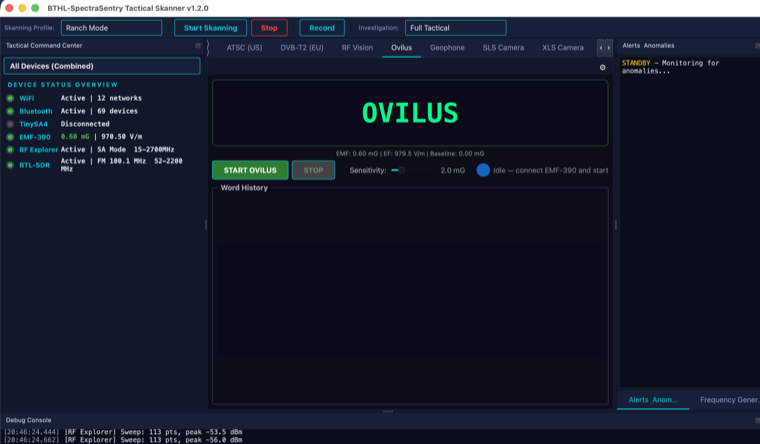
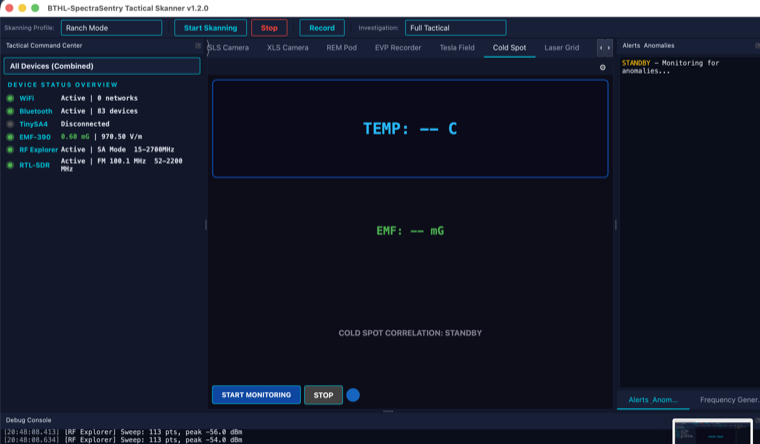
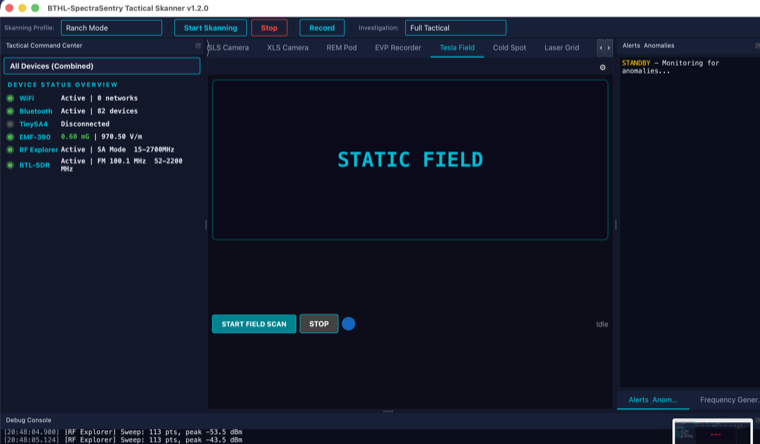
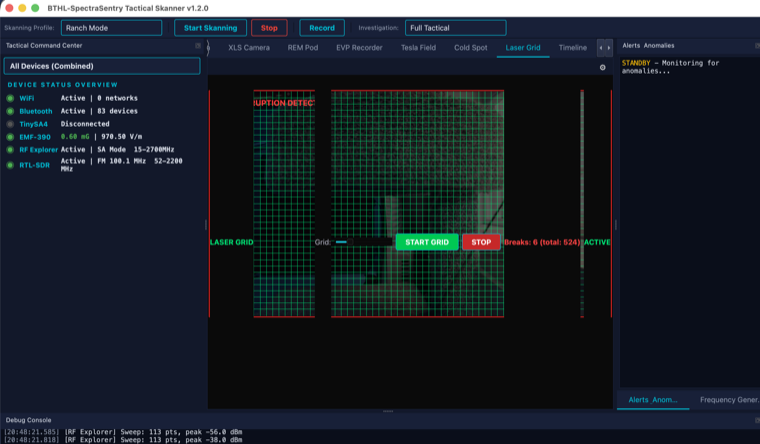
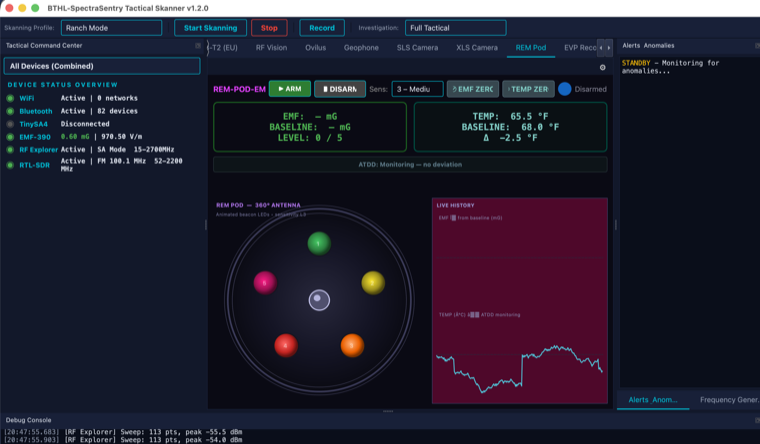
These tools turn the connected hardware into classic investigation instruments. The Ovilus selects words from real EMF/EF deviations on the EMF-390 (a deterministic mapping, not random). REM-POD shows a 360° electromagnetic-field display with an ATDD temperature history, and the Cold Spot correlates sudden temperature drops with EMF activity — temperature comes from a real BLE sensor relayed by SpectraSentryOmeter, never synthesized. The Tesla / Static Field view monitors charged environments, the Laser Grid detects break-ins of a camera-projected grid by real frame differencing, and the Geophone derives vibration from real microphone low-frequency energy. With no hardware present, each shows a “no sensor” state.
What it is for
- Ghost-hunt sessions — EMF spikes, word generation, cold-spot and vibration events.
- Time-correlating environmental events with RF anomalies during an investigation.
- Running multiple instruments at once from a single command center.
Step by step
- Connect the sensorsEMF-390 over USB drives Ovilus / REM-POD / Cold-Spot EMF; a mic drives the Geophone; a BLE temperature sensor (via the Ometer) drives temperature.
- Open a tool tabEach instrument is its own tab with Start/Stop and threshold controls.
- Set thresholdsTune sensitivity so alerts fire on real deviations from the ambient baseline.
- Review the timelineEvents from every tool land in a shared timeline for correlation.
The details
| Ovilus | Word selection from real EMF/EF deviation (deterministic) |
| REM-POD & Cold Spot | 360° EM field + ATDD temperature history; temperature via real BLE sensor (IPC) |
| Geophone | Vibration from real microphone low-frequency energy |
| Laser Grid | Camera frame-difference break detection at grid intersections |
| Tesla / Static Field | Charged-environment field display |
| Data | Real sensor / audio / camera input only — “no sensor” when absent |
In action